Jimmy Scott (BBC podcast) - my favorite singer (thanks to Stanley Booth).
Willy DeVille introduced me to him one night at the new Lone Star in NYC with Doc Pomus.
Then i saw him at a small gig at Tavern on the Green, which was the greatest, weirdest show I’ve ever seen.
I think Vince Bannon from Sony 550 might have made it with my girlfriend after i fell asleep at his apt.
(via BBC Radio 4 - The Tale of Jimmy Scott)
January 17, 2019
Jimmy Scott (BBC podcast) - my favorite singer (thanks to Stanley Booth)
.@TheSongBar 3 YouTube Playlists (Bowie Jean Genie influences, Soundalikes A-list, Soundalikes B-list)
TheSongBar
Bowie Jean Genie influences
4 videos
So many excellent noms over the festive period!Quite a few of my B-List picks were on my first draft A-List, but many of them are previously zedded – including, amazingly, The Sweet’s Blockbuster!
But in any case that riff can be traced back much farther than Bowie.Incidentally, three recordings are usually cited as the major influences on The Jean Genie:
Jacques Dutronc - La Fille du Père Noël
The Shadows of Knight – Oh Yeah
The Yardbirds – I’m A Man
Soundalikes A-list
24 videos
The Echoey A-List Playlist:
The Beach Boys - Surfin’ Usa
(Chuck Berry - Sweet Little Sixteen)The Beatles – I Feel Fine
(Bobby Parker – Watch Your Step)The Ting Tings – That’s Not My Name
(Toni Basil - Mickey)The Daysleepers – Release The Kraken
(Blue Oyster Cult – Don’t Fear The Reaper)Sam Spence – The Pony Soldiers
(Booker T & The MGs – Hang’em High)Kevin Ayers – The Clarietta Rag
(The Beatles – Being For The Benefit Of Mr Kite)The Aerovons – Resurrection
(The Beatles - Across The Universe)Cadaver Club – Follow Me To Hell
(Marvin Berry & The Starlighters – Earth Angel)Teitur – The Singer
(Laurie Anderson – O Superman)The Pogues – Wild Cats Of Kilkenny
(BBC Radiophonic Workshop - Dr Who Theme)Coldplay – Talk
(Kraftwerk – Computer Love)The Motors - Forget About You
(Keith Mansfield - Grandstand Theme)
Soundalikes B-list
22 videos
The Bring It Back B-list Playlist:
The Sweet - Blockbuster
(David Bowie - The Jean Genie)The Beach Boys – Don’t Worry Baby
(The Ronettes - Be My Baby)George Harrison - My Sweet Lord
(The Chiffons - He’s So Fine)Green Day - Warning
(The Kinks - Picture Book)Nick Lowe - I Love The Sound Of Breaking Glass
(David Bowie - Sound + Vision)Jet - Are You Gonna Be My Girl?
(Iggy Pop - Lust For Life)Adam & The Ants – Prince Charming
(Rolf Harris – War Canoe)Steely Dan – Rikki Don’t Lose That Number
(Horace Silver – Song For My Father)The Beatles - Lady Madonna
(Humphrey Lyttleton Band – Bad Penny Blues)Avishai Cohen – Will I Die, Miss? Will I Die?
(Miles Davis – Nuit Sur Les Champs-Élysées)Nico - Afraid
(Pachelbel – Canon In D Major)
January 16, 2019
10 Weirdest Elvis Memorabilia
10 Weirdest Elvis Presley Memorabilia
It would be impossible to come up with new, if there was a Guinness World Record for the most different Elvis searches.
The cool thing is that you never know what you’ll find if you scroll down the search results far enough.
For example, how about this photo?

When I clicked on the picture above, I linked to this:

Have you ever heard of Wikicollecting? It’s a new one to me. Like everything else on Wikipedia, Wikicollecting lets anybody post, update, edit, and illustrate any topic. So there is no way of knowing who created “The Top 10 Weirdest Elvis Collectibles” in 2012, and named the x-ray images above as the sixth weirdest..
Whoever it was, they actually listed eleven items, including an honourable mention (looks like our list provider is from England, or at least doesn’t know how to spell honorable). He provided pictures of just four of the eleven items, and they were all rather small and posted out of sequence. So, here is the Wikicollecting list “The Top 10 Weirdest Elvis Memorabilia,” with additional text and images thanks to the magic of Google.
Honorable Mention — Medical Swab:

# 10 — Signed Cast:

You will note that Elvis signed the cast twice. That’s because a drop of Elvis’ sweat fell on the autograph below the elbow and smudged his last name. Diana begged Elvis to sign it a second time, which he did.
.
# 9 – Strand of Hair:
(Could not find a picture of this one)
A single strand of Elvis’ hair was sold for $1,700 at a Henry Aldridge & Son auction in 2009.
The auction house said the strand was owned by Thomas B. Morgan Jr., an Elvis fan and former administrator at Shelby County sheriff’s office. Morgan told auctioneers he received the hair follicle from Homer Gilleland, Elvis’ personal Hairdresser for more than 20 years.
.
# 8 — Horse Blanket:

Elvis’ cousin Harold Lloyd gave this to his friend Rhonda in 1977. Rhonda’s sister dated Charlie Hodge for almost 4 years. Rhonda is in the background of the last picture taken of Elvis Presley returning home from the dentist in the morning hours of his death. She had actually stopped by to see Harold when Elvis came home for his last time.
.
# 7 — TV Remote:
(Could not find a picture of this one)
Elvis’ TV remote is being offered for sale by ElvisOwned.com for $1,800. The large remote, for an RCA 2000 television set, was owned by Greg Page, who owned the television after Elvis.
This remote must have sold since the Wikicollecting list was published, and its listing and picture disappeared from the website. Even the magic of Google search couldn’t come up with a photo of it.
.
# 6 — Wrist X-ray:# 5 — Benadryl Prescription Bottle:

# 4 — Dental Crown:

Weiss always kept an extra copy of the crown. When Elvis cracked his crown on a microphone during a performance, Weiss’s son, S. Lewis Weiss, flew the replacement crown to Las Vegas.
# 3 — Exercise Bike:

The gold exercise bike has a tension control knob and speedometer/odometer between handlebars. Odometer reads 69 miles. Manufactured by Barkleigh. In fine condition, with some light wear, the bike was accompanied by a COA from Greg Howell, the exhibition and collection manager of Graceland.
.
# 2 — Autopsy and Embalming Tools:
Leslie Hindman Auctioneers had two lots of Elvis’ funereal memorabilia slated for the auction, including funeral invoices, a toe tag once attached to the King’s corpse, embalming needles, forceps, lip brushes, needle injectors, an arterial tub, and an eyeliner pencil allegedly used to prepare the body for the funeral.
The embalmer said he kept the items after embalming Elvis the night of Aug. 17, 1977. Service Corporation International, the corporate parent of Memphis Funeral Home, had questioned the authenticity of the items and said the embalmer had no right to take them from the business. “Rather than argue with anyone, it’s better to just withdraw the item,”
My Google Images search did not come up with a photo of toe tag, actually marked “John Doe.” This was used as a replacement after the original was stolen by an eager fan during the chaos at the hospital. Unfortunately, the original will probably show up for sale someday.
# 1 — Lockheed Jetstar Jet:
Okay, that’s what one person calls the ten weirdest Elvis memorabilia. I really don’t see what’s so weird about the TV remote, the horse blanket, or the exercise bike. The weird thing to me is some of the prices mentioned. $468 for the medical swab – you can buy Elvis autographs for less than that. $1,700 for a strand of hair – way too much.
Maybe the signed cast is worth $1,700 – it does have two Elvis autographs on it. I’m not sure about $700,000 for the Jetstar. Maybe if it came with photos of Elvis inside it or standing in front, but think about all the Elvis memorabilia you could buy for that kind of money.
The arm e-rays are certainly weird, as is the replacement tooth crown. And finally, two items are not just weird, but also in horrible taste. How sick is it to spend $7,000 on Elvis’ bottle of Benydryl? And the embalming stuff is just too grisly. I hope that Service Corporation Inonaternatil destroyed them after pulling them from the auction
© 2013 Philip R Arnold, Original Elvis Blogmeister All Rights Reserved www.ElvisBlog.net
January 15, 2019
Elvis Presley's New Orleans Mardi Gras by Scotty Moore via scottymoore.net (best Elvis site on the internet)
 |
Elvis Presley's New Orleans Mardi Gras by Scotty Moore via scottymoore.net (best Elvis site on the internet) |
On May 1, 1955, Elvis, Scotty and Bill performed at the Municipal Auditorium for the first time with three shows while on a new tour with Hank Snow's All Star Jamboree.
Having toured with them on dates since February to an increasing popularity in the mid south and West Texas area, often to greater demand and much dismay of the headliners, this tour would take them into new territory as they traveled to Florida and the Southeast.
Peter Guralnick, in "Last Train To Memphis," wrote,
the tour began on May 1 in New Orleans, the day after Elvis' fourth Sun single, "Baby, Let’s Play House," was released.
It was billed as a three-week, twenty-city tour that would employ thirty-one different artists, some of whom would pick up and leave the tour at various points.
Headliners were Hank Snow, Slim Whitman, the Carter Sisters with Mother Maybelle, and Martha Carson.
Faron Young would join the show in Florida. In a solution the Colonel devised to prevent the kind of thing that had happened on the last tour, there would be a first half of "younger talent" that included Jimmie Rodgers Snow, the Davis Sisters, and the Wilburn Brothers, with
"one of the newest though most exciting personalities in the Hillbilly field . . . [whose] singing style is completely different from any other singer in the field," Elvis Presley, appearing just before the intermission.There were near-riots almost everywhere they played.
Johnny Rivers saw the show in Baton Rouge, and decided,
“I wanna be like that guy."
There were girls in every city, and after the show Elvis never lacked for company, cruising around town in the pink and white Cadillac he had just acquired to replace the Lincoln (once again he had his name painted in black on the door).
Jimmie Snow roomed with him on this tour. Bill Black, Jimmie Rodgers Snow, and Elvis in Meridian, MS - May 26, 1955
Photo courtesy Jimmie Rodgers Snow
 Postcard featuring The Municipal Auditorium in New Orleans ca. 1953
The Municipal Auditorium at 1201 St Peters Ave. in New Orleans, LA, adjacent to the French Quarter, opened in 1930.
One of the reasons it was built, says John Magill, head of research at the Historic New Orleans Collections, was to replace the French Opera House, which burned to the ground in 1919.
The auditorium was part of a planned municipal complex that was intended to fill much of what is now Louis Armstrong Park as well as extending along Basin Street.
But when the Great Depression set in, plans for the rest of the project were scrapped.
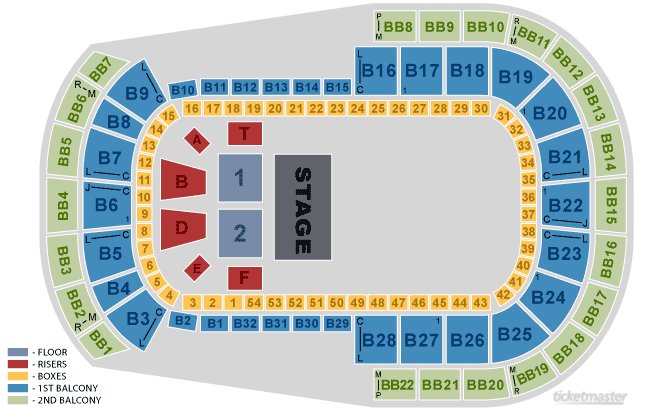
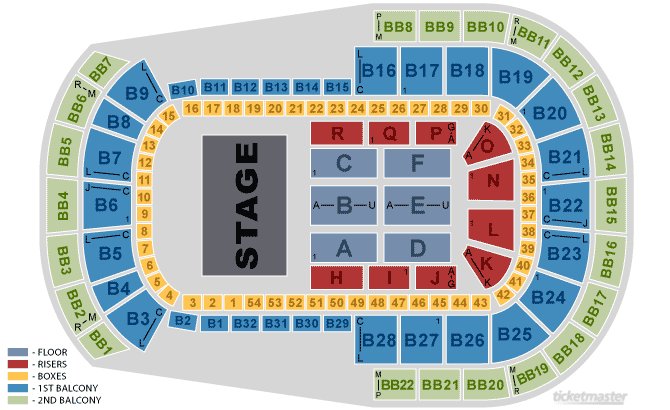
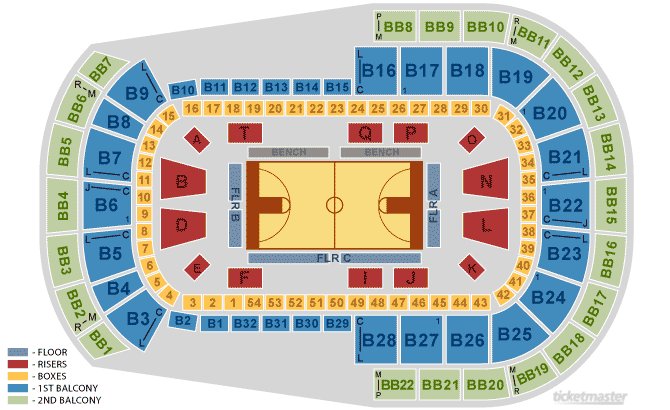
 Mayor de Lesseps S. Morrison presents Queen Ethel Elizabeth Seiler at the Krewe of Hermes ball in the Municipal Auditorium - Feb 22, 1952At the time it was considered one of the largest and most modern in this country with a total seating capacity of 10,000 that could be divided into two halls, one seating 6500 and the other 3500. It had fourteen other meeting rooms and 75,000 sq ft. of space for exhibit purposes. It has hosted many concerts and events, perhaps being best known as the site of many of the New Orleans Mardi Gras Krewe balls.
 Cleaning up the Municipal Auditorium after a carnival ball - undated
Photo courtesy New Orleans Public Library Louisiana Photographic collectionKrewes are the masking and parading clubs (or social organizations) for which New Orleans is both famous and infamous. Most Krewes developed from private social clubs that have restrictive membership policies. Today, in order to obtain a Parade Permit, all Orleans Parish Clubs must sign Affidavits agreeing not to discriminate in terms of membership, but many of the more established Krewes continue to allow membership by "invitation only."
According to Oscar Davis, wrote Guralnick, that marked the turning point -- that was the real eye opener, the Colonel said to him.
By the time the show got to Richmond three days later, it was as if Elvis had never been anything but the Colonel's boy. reproduction of Times Picayune Aug. 12, 1956 ad
ad courtesy New Orleans Public LibraryTheir next (and last) appearance at Memorial Auditorium was on August 12, 1956, when Elvis, the band and entourage arrived in New Orleans from Jacksonville, FL for two shows. This was the last stop on a ten day tour that had started in Miami, which, aside from this one, consisted of dates entirely in Florida. Unlike their first appearance at the Auditorium which started their tours of Florida and the southeast, this would mark the end of appearances in that area, and touring on a regular basis for that matter.Elvis arrives in New Orleans in his new Lincoln - Aug. 12, 1956 Photo © Jay B. Leviton courtesy Ger Rijff's "Elvis Close Up"As had often been the custom they traveled at night and slept by day. Traveling with Red West and cousins Gene and Junior Smith, Elvis arrived in the new Lincoln Continental Mark II that he had purchased in Miami at the start of this tour.Phil Maraquin backed by tour orchestra entertains the crowd - Aug 12, 1956
Photo © Jay B. Leviton courtesy Ger Rijff's "Elvis Close Up"Elvis is presented with a key to the city prior to a performance - Aug 12, 1956 Photo © Jay B. Leviton courtesy Ger Rijff's "Elvis Close Up"As had appeared on most of the shows on the tour, this show opened with performances by singers, Frankie Connors, Nancy Ford, The Jordanaires, and comic magician Phil Maraquin backed by the tour orchestra recruited by Al Dvorin in Chicago. When Elvis finally went onstage he was presented with "the key to the city" and a scroll of thousands of signatures from fans.The Jordanairse, Elvis and Bill Black at the Municipal Auditorium - Aug 12, 1956
Photo © Jay B. Leviton courtesy Ger Rijff's "Elvis Close Up"On the 13th, the day after the shows, the review in the Times Picayune went as follows:Elvis performing on stage at the Municipal Auditorium - Aug 12, 1956 Photo © Jay B. Leviton courtesy Ger Rijff's "Elvis Close Up"Elvis Presley jerked his tortuous way across the stage of the Municipal Auditorium twice Sunday, "sang" eight or ten songs, thumped on a guitar, fell to the floor, knocked over microphones and set off a din of teenage squealing unparalleled since the heyday of Sinatra.3Elvis performing on stage at the Municipal Auditorium - Aug 12, 1956
Photo © Jay B. Leviton courtesy Ger Rijff's "Elvis Close Up"At matinee and evening performances before nearly full houses on each occasion (the auditorium holds 10,000), Elvis the Pelvis started each show with a small tiny belch and on each occasion brought the house down. It was that kind of show.3Elvis performing on stage at the Municipal Auditorium - Aug 12, 1956
Photo © Jay B. Leviton courtesy Ger Rijff's "Elvis Close Up"He sang all the songs that are now a mark of jukebox America. "Blues Suede Shoes" and "When My Baby Left Me" and "Heartbreak Hotel" and "Tutti Fruiti" and "I Want You, I Need You, I Love You" and a number of others equally deathless.3Elvis performing on stage at the Municipal Auditorium - Aug 12, 1956
Photo © Jay B. Leviton courtesy Ger Rijff's "Elvis Close Up"To say that Elvis Presley sings is, on the strength of his New Orleans performance, giving him the benefit of doubt, for more often than not what passes for his voice is drowned out as often as it was audible. On the other hand he is not known for his voice. He is a personality, an entertainer who has made an incredible mark on a whole nation and in New Orleans he lived up to this latter role with all the vigor and aplomb of a veteran which he isn't.3Some of the fans at the Memorial Auditorium - Aug 12, 1956
Photo © Jay B. Leviton courtesy Ger Rijff's "Elvis Close Up"His auditorium audiences were, by and large, made up of girls from about 10 to 16 who came armed with flash cameras, autograph books, photographs of their hero and who behaved in a way that scarcely reflects credit on teen-age America. At the evening performance he contorted his body in such a manner as to cause whole platoons to rush to the edge of the stage. Girls of 10 and 12 lunged to touch him.3Bill, Elvis and DJ performing on stage at the Municipal Auditorium - Aug 12, 1956 Photo © Jay B. Leviton courtesy Ger Rijff's Elvis Close UpWhen police started to move in, Elvis jerked his way back to the center of the stage and comparative safety of the trio which backs him up.3Elvis performing on stage at the Municipal Auditorium - Aug 12, 1956He flings his limbs about and quivers in such a way as to make one think he might have a trick knee or hip, possibly from an old war injury. But this is not the case. This is just Elvis Presley. At each performance his appearance was preceded by singers, dancers and comedians, some of whom had talent far exceeding that of the star but none of whom who could touch the lad when it comes to showmanship.3Elvis performing on stage at the Municipal Auditorium - Aug 12, 1956
Photos © Jay B. Leviton courtesy Ger Rijff's Elvis Close UpAt each show he was onstage about 35 minutes, delivering the same songs that have become de rigeur for the nations disc jockeys. He was also presented with a key to the city and a scroll bearing more than 5000 signatures of youthful New Orleanians who would wish him luck and some who carried banners inscribed, "Elvis for President."3Elvis and Bill on stage at the Municipal Auditorium - Aug 12, 1956 Photo © Jay B. Leviton courtesy Ger Rijff's Elvis Close UpWhether he'll be around as long as the Davy Crocket hat remains to be seen.3According to Peter Guralnick and Ernst Jorgensen in "Elvis Day by Day", the Colonel had guaranteed Elvis $500 a performance or $2,000 a day, whichever was greater, and Elvis received a total of $20,000, plus a $7,500 commission on souvenir sales for the ten-day tour. The band however, received their "working" salary of $200 a week. After two long years on the road the days of constant touring were over. Ten days later Elvis would be in Hollywood to begin production on Love Me Tender, the first of four movies that he would make before entering the Army. They would only make ten more appearances in 1956 and perform shows on three short tours in 1957. Lawrence Welk Show at the Municipal Auditorium, Pete Fountain on clarinet c. 1958 Photo courtesy New Orleans Public Library Louisiana Photographic collectionThe Auditorium in New Orleans continued to offer major attractions through the 1950s and into the 1970s at least. In 1969 and 1970 it was home to the New Orleans Buccaneers one of the charter franchises of the American Basketball Association, founded in 1967. It was the city's first professional basketball team but the team was sold and moved to Memphis in 1970. During its inaugural 1974-1975 season the Auditorium was home to the New Orleans Jazz basketball team. They finished in last place that season with a 23-59 record and moved to the Louisiana Superdome the following season.
 Led Zeppelin in Long Beach - June 27, 1972
Photo by Richard CreamerThe venue hosted many of the major rock acts of the 60s, 70s and 80s. Led Zeppelin performed at the Municipal Auditorium in August of 1971 and May of 1973. They reputedly were said to have appeared there in 1975 (unconfirmed) on their American tour accompanying the release of their "Physical Graffiti" album and so did Rod Stewart and Ron Wood with Faces later that year. Bruce Springsteen and the E St. Band performed there in 1976 and 1978. The venue also was a casino before the new Harrah's New Orleans building on Canal Street was opened.


 In the 90's, fueled by the desire to bring more profitable events to the facility, the city decided to renovate and transform the Auditorium into a multi-purpose arena and auditorium. The project involved building a regulation hockey rink inside the building flexible enough so that it could be converted back to an auditorium for other uses. The building was able to go from a hockey rink, to a concert hall, to a basketball court, to a Mardi Gras ball setting in a one-day turnaround.4
 View from the stage in Municipal Auditorium
Photo courtesy Louisiana Film and TelevisionThe Auditorium was renamed the Morris F.X. Jeff Sr. Municipal Auditorium, after a former executive in the New Orleans Recreation Department who had committed his life to improving conditions and opportunities for New Orleans children. Completed in October of 1997, the 200,000 square-foot building featured a 5,000-seat arena and was the new home of The New Orleans Brass, a minor league hockey team of the East Coast Hockey League (seating for stage events was 7,853). View from the stage in Municipal Auditorium Photo courtesy Louisiana Film and TelevisionThe Brass, a one-time East Coast Hockey League affiliate of the NHL's San Jose Sharks, lasted only five seasons (1997-2002). The Brass averaged a home attendance of 4,300 (78-percent capacity) at the Municipal Auditorium during its first two seasons. The Brass moved to the New Orleans Arena for the 1999-2000 season, but the more cavernous confines of the New Orleans Arena made spectators feel further from the action.5
 View of the stage in Municipal Auditorium
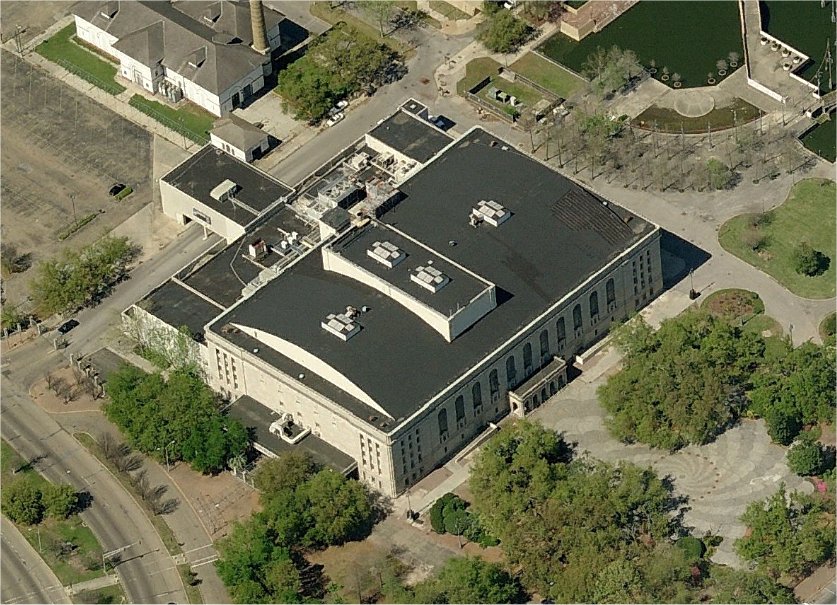
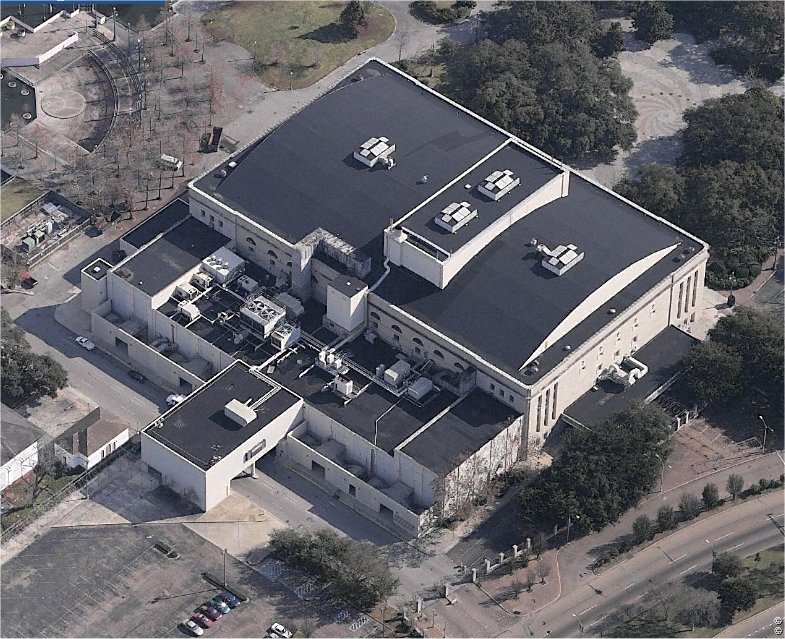
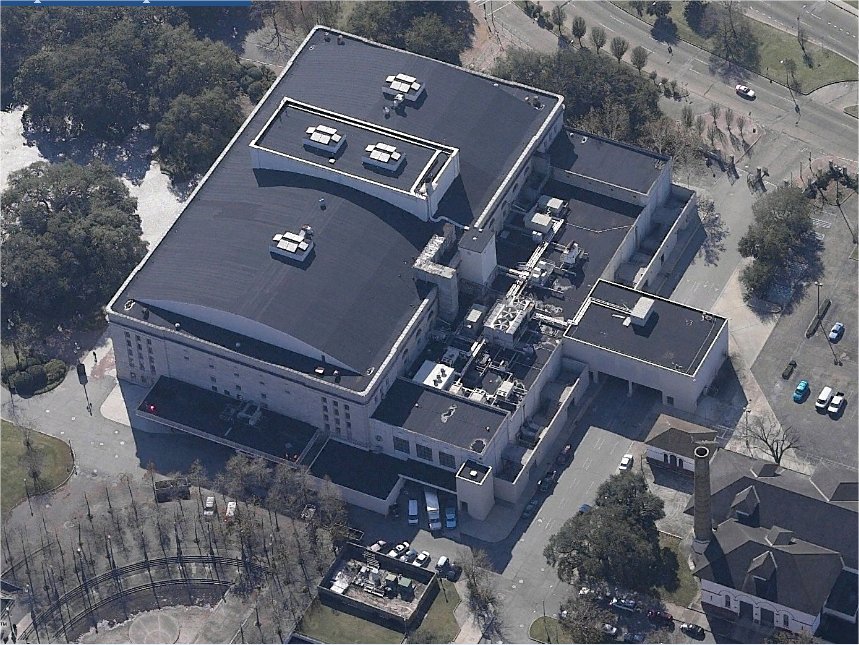
Photo courtesy Louisiana Film and TelevisionWith the ECHL under pressure to release a 2002-03 schedule, the team suspended operations on July 18, 2002 as it struggled to hammer out a deal that would have designated Morris F.X. Jeff Sr. Municipal Auditorium once again as its home playing facility.5 Katrina floodwaters covering roadways and swallowing up buildings - Aug 30, 2005In August of 2005 the auditorium suffered damage and associated flooding when Hurricane Katrina, one of the costliest and deadliest hurricanes to the hit the US, wreaked havoc along much of the north-central Gulf Coast. The storm flooded the basement and damaged the roof of the auditorium destroying all of it's mechanical and electrical systems located in the building's basement.1Aerial view of the Municipal Auditorium - 2007
Photos courtesy Microsoft Earth DataPrior to and immediately after Katrina, the Municipal Auditorium was managed by SMG corporation, which also managed the adjacent Mahalia Jackson Theatre, the Superdome, the New Orleans Arena, the Pontchartrain Center and many other facilities nationwide. In January of 2006 the city produced a two-page list of capital improvements and preliminary estimates to restore the auditorium (at a minimum of $7.5 million). By July of 2006, beyond pumping out the flooded basement and removing soaked carpet and water-damaged debris - all paid for with FEMA funds and completed by early December 2005 - nothing much had happened. The city said that SMG's services were no longer necessary because the building was not being used and terminated its contract after March 31.1Aerial views of the Municipal Auditorium - 2007
Photos courtesy Microsoft Earth DataAccording to a Recovery Projects Report published in June of 2008, there are no current plans underway to renovate the Auditorium. Aside from repairing the roof and exterior to seal the building from outside elements, repairs to the Auditorium are not high on the priority list to return it to working order. They have it listed as preliminary design stage phase, which is the fourth of nine phases. At present, attention is focused on the completion of the Mahalia Jackson Theatre for the Performing Arts, mostly because it is more of a multi-purpose performing arts facility and thus can be used by more organizations - ballet, symphony, opera, musical theatre. The Theater is scheduled to reopen in January, 2009. The Mayor's Office of Recovery Management is responsible for this information and recovery can be tracked at www.cityofno.com/recovery.6

 Tyler Dixon in his Davy Crockett (Coonskin) Hat - July 2006In the 1960s, Leonard Bernstein was quoted as calling Elvis “the greatest cultural force in the twentieth century.” His popularity and that sentiment has prevailed and continues to grow still today. The Davy Crockett (or Coonskin ) hat referred to by the Times Picayune writer was made popular in large part by Disney's 1954 television show "Davy Crockett, Indian Fighter" and its sequels, starring Fess Parker. The hat went out of fashion by the end of the '50s.1955 Hank Snow All star Jamboree advertisement courtesy Ger Rijff's Long Lonely Highway. 1956 Times Picayune article courtesy New Orleans Public Library.2 excerpt from Mardi Gras: The Krewes and The Parades
3 "VOCALIST SHOWS USUAL TACTICS Quivers, Jerks in Rendering Favored Number" by Pen Wilson, Times Picayune Aug. 13, 1956
4 New Orleans Transforms Landmark Auditorium courtesy Graphisoft Virtual Building Solutions
5 "Frozen In Time: Six-year anniversary of New Orleans Brass folding" by Chris Scarnati, For The Times-Picayune July 17, 2008
6 courtesy Mary Beth Romig, Director of Communications and Public Relations, New Orleans Metropolitan Convention and Visitors Bureau
Elvis' 1956 Lincoln Continental Mark II on auction at the MGM Grand - Oct 9, 1999
Photos courtesy AMA Pro RacingThe 1956 Lincoln Continental Mark II that Elvis bought in Miami at the beginning of his August 1956 tour remained in his possession for the rest of his life. It was sold by EPE at auction at the MGM Grand in Las Vegas in 1999 along with many other items from the Archives. It is now on display at Townsend's Classic & Antique Auto Collection in Shawnee, Oklahoma.
All photos on this site (that we didn't borrow) unless otherwise indicated are the property of either Scotty Moore or James V. Roy and unauthorized use or reproduction is prohibited.

Subscribe to:
Comments (Atom)