Kenny Lovelace, Me, and James Burton, backstage at HOB NOLA - Mack said it was about playing touch football with elvis
Jerry Lee Lewis duets with Mack Vickery on Mack's Rockin' My Life Awayfeaturing legends James Burton and Bob Moore(Nashville Now 1984)
Mack was mine and the Killer's favorite songwriter (Rockin' My Life Away, nuff said?), and i had the opportunity to spend a while with him at Jerry Lee's birthday party at the ranch in Nesbit, 1990, while recording Linda Gail Lewis.
Weird trivia:
i asked him what the song was about, and you'll never believe what he told me.
find the answer under the video in the comment section
Thank you for posting this. My husband would have been 78 years old today. He and Mack were best friends and he worked for years as Jerry's road manager.
Merle Kilgore sings his and Mack Vickery's When You Get on the Whiskey (Let Somebody Else Drive) with The Bama Band, Hee Haw, 1985
Maybe you've heard John Anderson's version?
It says in this book excerpt that President Reagan gave him a signed letter of appreciation for this song, because of Nancy's 'Just Say No' drug movement. (it didn't work though, because when i met him, i think he could hear the grass grow.)
Lyrics
I heard it on the radio and six o' clock news
Said, "You'd better not drive when you get on the booze"
The sheriff was on TV an a shakin' his hand
Said, 'We're really crackin' down you better understand'
When you get on to whiskey
(When you get on to whiskey)
When you get on to whiskey
(When you get on to whiskey)
When you get on to whiskey
Let somebody else drive
Started drinkin' on Friday and by Saturday night
They had be blowin' through a tube charged with DUI
Cuffed and booked and thrown in a cell
I was tryin' to sober up and tell him myself
When you get on to whiskey
(When you get on to whiskey)
When you get on to whiskey
(When you get on to whiskey)
When you get on to whiskey
Just let somebody else drive
Forty eight hours is a long is a long time to kill
In a room full of drunks surrounded with steel
Hell's all the serve in a Metro Bar
So don't be drinkin' when your drivin' your car
When you get on to whiskey
(When you get on to whiskey)
When you get on to whiskey
(When you get on to whiskey)
When you get on to whiskey
Let somebody else drive
When you get on to whiskey
(When you get on to whiskey)
When you get on to whiskey
(When you get on to whiskey)
When you get on to whiskey
Let somebody else drive
When you get on to whiskey
(When you get on to whiskey)
When you get on to whiskey
(When you get on to whiskey)
"His name is Pete Drake. He got the brilliant idea one time to make his steel guitar talk and he actually does it, right now, with a beautiful song, Forever" -introduced by my hero Merle Kilgore
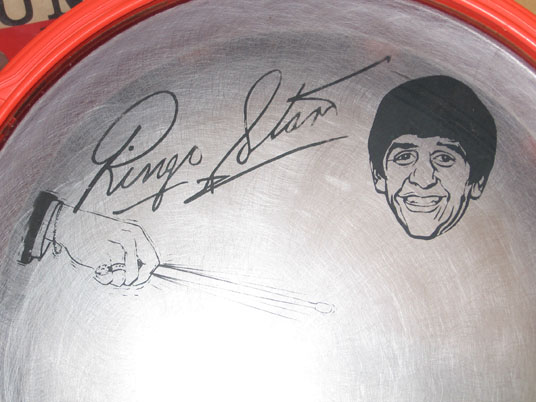
Pete Drake (George Harrison, Ringo Starr, Phil Spector) Talking Steel Guitar session
Performs:
"i'm just a guitar (everybody picks on me)"
"joggin'" only i've ever heard
"danny boy"
"bridge over troubled water"
thanks to the original uploader for finding and uploading to YouTube.
this little gem was found unmarked by a wonderful Memphis videographer, and lo and behold, through persistent viewing through reams of b-roll, i discovered this never-before-seen personal video message from Ringo Starr and Chips Moman to Pete Drake, wishing him the best for an unnamed award circa 1987. [Ringo and Chips were in Memphis preparing to record Ringo's Memphis album, which would soon be aborted and end in legal problems.]
the 'Pete'Ringo refers to, regarding finding country tapes in his car, is indeed, Pete Drake, who was the Nashville record producer responsible for convincing Ringo to cut a country record in Nashville with Nashville players, all on the basis of his coincidental discovery of Ringo's country music collection, discovered while picking him up at the airport. [their record became Beaucoup of Blues, winning more than a few top 10s, as well as critical accolades.]
1.the first thing that's on my mind, is,
and you better answer some of these. I know how to deal with you silent
but deadly types; twice as many questions as you want answered.
I went
and saw the Box Tops at Beachhead in Cleve, and saw Peggy and Sue
Million and the guys from Reigning Sound who were playing the next night
with Mary Weiss from Shanghai-la's. I vaguely even remembered the
singer guy, although it was the drummer guy who was married to Sue
Million who was nice enough to put me on the list, but back to the
Tops:
Fucking weirdest show.
Except maybe for James brown on PCP, or the
time George Jones rode off on the back of a motorcycle with a bottle of
Mariquilla in his hand and a 22-year-old Blond-driveler-Shintoist-yeah.
2. I know probably 99 different types of irony, and use them all the
time, and this was not one of them. Still not able to tell you if Alex
was being real or not, having seen his scroungy act (Little Fishes,
anyone?), and having seen his superconducting distant act (Panther Burns as sideman). This one was more like a Game Show host for the Sultana
Brunei. I knew the fee was six-figures or a hundred virgins. I
understood, but this was boring Cleveland, and an Oldies show at that,
and there wouldn't be more than 150 people. I guess it was Irony 101.
Anyway, they played "Whiter Shade of Pale" and a couple other ones, LX
on bass for Green Onions. I really am not prepared to mine my psyche to
explain. I go directly to the backstage orgy of me and Lx. I walk
backhand-tentatively, after being convinced by Sue that it would be fun
despite the weird scenes that I had, and the complete schizophrenic
quality of our long but sparse relations. He'd just finished
Burn-N some High Grade Locoweed. Still, so Sue goes first and does
the'remember me? I met you at western sizzlin' when.
3. I was a waitress, and watching graceless; he's lookout-inchoate.
I can only describe a very lax Hamiltonian.
Not sure which way he's
gonna go with the whole remember me reply, but then. I look around and
it's a whole different backstage scene, man. Local radio DJs. I assume
from oldies stations, family members of other boxtops, Midwestern
people. I still have not figured out; and Sue is dressed like Adultery
Vaudeville. Somehow that took a little pressure off me in case he decided
to let her have it. I knew that it'd be OK. I knowing. I
make her cry, then Alex mightn't able to make her morph into a bush. So
he's doing that lx-thing, and cachepots, blowguns in the chasms of
his mind, and he's probably thinking about something, and she
finishes, and he says, "Oh, yeah, vaguely," and it works--shes happy and
he's still thinking, and nobody gets hurt.
4. Now its my turnaround course. Smart enough to just stand there
and look at him without risking saying any words that might be used
against me in his comeback--he looks a lot older, handsome. From the
last time, maybe 7, 8 years ago, we had a good, weird New Orleans
evening together, and he was the Incontestability. I was buying the Cuba
Libras, and he breaks out in the biggest grin you've ever seen and does
the whole what the fuck are you doing here-routine with, so far, no
repercussion I haven't seen anyone I know yet, except for the night
before with Peggy and that guy who frowns, and its great. I really am
believing in it, just a little suspicious. I don't know if it was
the extra ADD, or whatever. I couldn't keep my mouth shut. I talked
to Alex. I would have never done probably as the first person since I've been here; so it was 7 months-worth of stuff; and
with me, ya know, I can go a little bit overboard, to say the least,
with the questions, and if
5. you let me get away with one the second one's gonna be even
weirder and then exponentially on and onto. Up to the question about
something like, hey, Ive been meaning to ask you, do you remember a guy
around Stax nicknamed Super Whitey. I was doing Linda Gail's
record........you can imagine....well, that was the tipper: Jekyll met
hide and it was memorable: something like this.
I asked him about
that bouncer guy at that weird bar in the seventies that's in that
Memphis book who sang on that Bach's bottom stuff, and was an Eggleston/Chilton Quaalude-pal ... not a good start; so it was, you know, marry the
problem with questions about things you know a little bit, but you have
no idea what it is that you're talky about--it was kinda like Andy
Griffith and Barney. I was just smiley and lovey, but he smelled blood
and the whole place stopped and was presetting the oldies star who sang the letter. And then it got downright absurdity, denying knowing anybody
that was a bouncer, and, the best one was, and even Gary from boxtops
laughed at this one--that he never knew anyone in Memphis who carried a
gun.
I couldn't contain myself and. I think. I told him how. how I met Cyndi
Underwood; how she leaned over the Tenna bar to me. I just gotten offstage with you guys, and asked me if...I wanted to go back to her
place and have some Lemon Meringue pie, and she was wearing a fur
coat--nothing on underneath, and then her Derringer fell onto the floor out of her boots...well.
6. I don't know if he knew her, Vouchsafe, KNEW her, but he did some
more stuff, and about ten minutes later it normalized out when I brought
up Harold Cowart, my Louisiana bass player buddy, who used to play with John Fred, etc.
Ya know, trying to throw in the obscure cool thing.
I
think it heated off and worked. Cut to Gary Top; got in the conversation,
and Alex started telling stories 'bout the playboys, and it was
great. I never thought I'd hear those stories out of his mouth in a million years, and it was almost over.
I had a few more questions, like
about Katrina, which was his favorite subject apparently, and I got to
hear, I got rescued off my roof by a helicopter story.
I had not heard
before but which must have been almost rote, having been in New Orleans
for the past few months, and he told me some almost unreadable-for-sincerity--update about Gus, and that...I don't know.
And he was
eager to talk about the old gang, so we went over Rene, Ron (Easley), you (Doug Easley), Ross (Johnson), Don (Spicer), George R., and whoever else we could think of.
now keep in mind he's doing this. I think he can, at this point, at
least, give us barely perceptible rockstar eyebrow looks as one by one
the Beefaroni Midwestern middlebrows come by and hand him a Box Tops
record, DJs come up and talk about the show or their station, and one
woman hands him a picture of her boyfriend to sign crusher only piece of
paper she's got--on that one he starts to laugh and brings me into the
exchange, and gets close to the old evil LX.
I can recall couching
hidden sarcasms and practiced understatements... I was gonna write about
a bunch of stuff.
I say.
I'll save it for next time.
I may not ever
feel this prolific, thankfully, for you, again.
This is officially the
longest email I've ever written anybody.
Last night the festive stratosphere here at South by Southwest was interrupted when news broke that AlexChilton had died. As part of the Box Tops and Big Star...MIRACULOUSLY SOME EMBEDDED VIDEOS SURVIVE FROM THIS POST!
』【thanks to the original post which the internet has ruined】 ♫♩♪ ♬ ★ ☆♥℞№ ♨Ⓧ
∴◎×☼ 〓 ⊥ 〒 Ⓨ
Ⓧ 3D 3-D℞ 3-D
Bangkok
"Alex Chilton" R.I.P. sxsw "panther burns" "New Orleans" memphis "the
letter" "make a little love" box tops" "tav falco" "jim dickinson" "New
Rose" disque "patrick mathe" records Bangkok "My Rival" 3-D "like flies
on sherbert" "william eggleston" "jim dickinson" chilton "the box tops"
3d hd "greatest hits" punk mrjyn whatgetsmehot youweirdtube
yt:quality=high "george reinecke" coman "ross johnson"
“I suggest that the city cannot afford a cultural fiasco that will make it a laughing stock at best … Far better to have no jazz festival than a fake jazz festival.”
In August 1967, a particularly sharp-tongued letter ran in the New Orleans Times-Picayune.
“… I suggest that the city cannot afford a cultural fiasco that will make it a laughing stock at best,” it read. “… Far better to have no jazz festival than a fake jazz festival.”
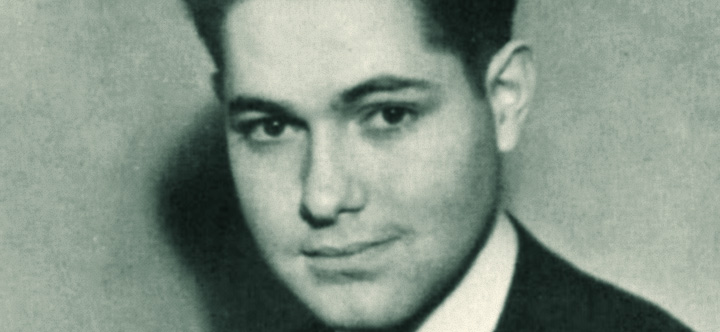
The writer was Al Rose, a notoriously opinionated New Orleans native, a pioneering jazz producer and historian, writer, artist, and adventurer. Rose, born Etienne Alfonse de la Rose Lascaux died on December 15, 1993, due to complications from a stroke. He was 77.
But what was Rose’s beef with the event that would become known as “Jazzfest”?
Well, apparently #NOLA has been able to afford it - it is laughably mostly not jazz (what little there is has been shunted to side stages in poor time slots in order to maintain a fig leaf of jazz cred), and yet people still go and pay..their URL tells it: https://t.co/PlOz93X5cLhttps://t.co/FvzBtWLcXR
The organizers, it seemed, had announced plans to bring performers Stan Kenton, Duke Ellington, and Count Basie to the city musicians that Rose did not consider true jazz artists.
No, he argued, this was orchestra music, “rooted in European forms and “…not related to, not derived from, not evolved from jazz in any way.” To be jazz, as Rose wrote in the preface to his reference work New Orleans Jazz: A Family Album, “music must be (a) improvised, (b) be played in 2/4 or 4/4 time, and (c) retain a clearly definable melodic line.”
There is only one type of jazz, wrote Rose to the Times-Picayune. You don’t think so? Come on, debate me. The festival went on, however. And Rose went back to work. Championing authenticity in jazz was Rose’s lifelong mission.
“He had a personal attitude towards himself and the world,” says fellow jazz historian and musician Danny Barker, a close friend. “He was a man you couldn’t argue with—you could not change his mind on nothing. He’d go down fighting.”
And like a jazz cat with nine lives, Rose spent his life fighting for ideas. His battles were waged on many fronts: music, art, politics. This included a stint in Mexico as bodyguard for exiled Russian revolutionary Leon Trotsky. And, reputedly, Rose also spent some time smuggling guns during the Spanish Civil War, parachuting into Spain to free political prisoners and smuggling revolutionaries into this country in a boat with a false bottom.
“I’m still finding bullet holes and scars on Al that I’d never seen before,” his wife, Diana Rose, once told me.
I met Al and Diana just five months ago, when I hoped to write a profile for LouisianaCultural Vistas of Al’s curious life. I had heard all the stories, and wanted to meet this Hemingwayesque character who lived in my city, and who offered a window to the secret courtyards of the 20th century.
Al Rose, at the microphone, poses with (from left) Earl Hines, Louis Armstong, Barney Bigard and Arvel Shaw at Philadelphia’s Academy of Music in 1947.
Sadly—for me, at least—that story will not be completed. Rose welcomed conversation, but his mysteries were now impenetrably closeted in his mind. Perhaps searching for a “Rosebud” during our only interview, I asked him if there was one thing he had learned that held true, whether he was working in jazz, art, or politics. He had a quick answer.
“People always resisted the idea of having an idea,” he said.
Rose started acting on his ideas early. At 14, he ran away from home after refusing to be confirmed into the Catholic church, reputedly writing on the bathroom mirror, “Don’t try to find me.” He changed his name and made his living drawing caricatures in Mobile, Alabama, and New York’s Coney Island, and invented a false past and enrolled in a prep school in Pennsylvania.
Rose had been exposed to jazz as a child, when his father hired a band for a traveling carnival, and musicians often served as his babysitters. In 1936, when he was 19, Rose produced what was the first jazz concert, in Philadelphia. For the first time ever, people bought tickets and sat in chairs and treated jazz as seriously as European classical music. The program that first night included Sidney Bechet, Sidney De Paris, and Freddie “Gatemouth” Moore.
Then Rose left for Mexico, where he studied art with the famous muralist, Diego Rivera. He lived with Rivera and, as part of his tuition, he protected Trotsky. “I had the conviction that he was doing important work,” he once said, adding that he wasn’t actually a Trotskyite. ‘There were 12 separate incidents in which we were fired on. I had a tooth shot out. And I had to use a variety of names. I was only 22.”
Returning to the United States, Rose worked as a welder in Philadelphia and helped organize the Congress of Industrial Organizations (CIO). He produced countless jazz concerts and over a hundred records, and in 1946 he launched a syndicated radio program, Journeys into Jazz.
“The secret to my life is it doesn’t click,” he once said. “It’s not pointless, but aimless.” Rose met Diana, his third wife, at a Mensa meeting in Florida. She takes some credit for steering him into his late career as a writer. “I wanted him to start doing something that wasn’t so dangerous,” she explained.
New Orleans Jazz: A Family Album was Rose’s first book, which he published in 1967 with Edmond Souchon. Then came Storyville, New Orleans, which includes seven reminiscences by madams and prostitutes who worked in the infamous red-light district. One of these interviews became the basis for the Louis Malle film, Pretty Baby. But when Rose realized that the film was going to be historically inaccurate, he tried to return his money and begged that his name be stricken from the credits. He failed; his name remains at the end of the film.
One of Rose’s best friends was ragtime pianist Eubie Blake, and Rose published a biography of him in 1979. In his forward to the book, Blake himself wrote that “When I first read the manuscript, I learned a lot about Eubie Blake …” But it’s I Remember Jazz: Six Decades Among the Great Jazzmen, published in 1987, that reveals the most about Rose himself. It chronicles his own aimless, but never pointless journeys into jazz, 60 years of friendships and behind-the-scenes work with the music he so fiercely defined and defended.
Although Rose once said that he had “no fierce need for immortality,” his work shows no sign of slowing down. His collection of band arrangements, photographs, books, sheet music, correspondence, and recordings is a major attraction of the Hogan Jazz Archives at Tulane, and has been used in hundreds of doctoral dissertations. One of his books, a biography of Storyville madam Lulu White, has only so far been published in France. And a documentary team is currently producing a study of Storyville, using filmed interviews with Barker and Rose.
According to Diana Rose, her husband was physically incapable of raising his voice past conversational tones. But when he stood up at age 14 to deliver his lifelong solo, he blew loud and hard. Sure, Jazzfest organizers, Pretty Baby, and Trotsky’s assassins all eventually found their mark.
But in jazz, that great musical forum for the exchange of ideas, so did Al Rose.
—–
Michael Tisserand is a New Orleans-based freelance writer. A graduate of the University of Minnesota, his work has appeared in Offbeat magazine, Downbeat and USA Today. He is the author of The Kingdom of Zydeco (1998) and Sugarcane Academy: How A New Orleans Teacher and His Storm-Struck Students Created a School to Remember (2007).