SEO

January 12, 2019

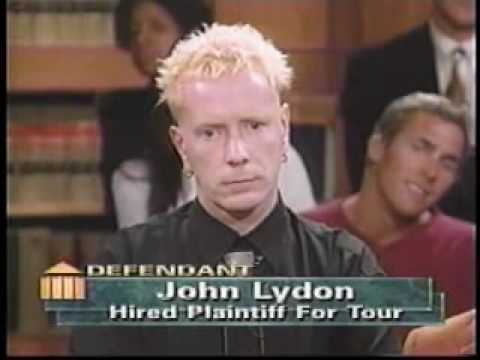
John Lydon v Judge Judy (1997)


https://66.media.tumblr.com/32e2ed8984e89d7470252a0a279f9afb/tumblr_pl7jtvkVYJ1wlzku0o1_500.jpg

John Lydon v Judge Judy (1997)


https://dangerousminds.net/content/uploads/images/Lydon_judge_Judy.jpg

In 1997, Robert Williams (former Captain Beefheart, Sex Pistols - John Lydon drummer) filed a lawsuit, which aired on Judge Judy. Williams claimed that Lydon had head-butted him and fired him for no reason.

    And so the two parties found themselves in the syndicated television chambers of the esteemed Judge Judith Sheindlin, who referred to Williams as a "nudnik," and scolded Lydon when he resorted to classic Johnny Rotten behavior (blowing his nose loudly and interrupting the proceedings).

    But, according to a Virgin Records press release promoting the Judge Judy taping, "During rehearsals, Williams' behavior became increasingly provocative, adversely affecting the camaraderie of the band." With no time to find a replacement, they went ahead with him anyway, but scheduled a dinner meeting to discuss the matter with Williams.


    Lydon hired drummer Robert Williams (who might be the only person on the planet who can claim to have worked for both Captain Beefheart and Pee-wee Herman).


    Judy obviously doesn’t care much for Williams and calls him a “nudnik.” She seems to like Lydon, though, despite having to shush his snide outbursts numerous times.


JOHN LYDON: There's no point in me wasting money on separate individual hotel rooms, when I'm perfectly able to share. And I'm apparently the pop star.

JUDGE JUDY: Don't play something for me that doesn't say what you purport that it doesn't say. It doesn't say anything about his acknowledging that he assaulted you. Stop! Say nothing else!

Mr. Lydon, you have almost been very patient, sir. (The court laughs).

LYDON: Well, as you can understand, Mr. Williams is a very difficult person to work with, and I think this is classic him.


Best words:

     lydon (16)
    williams (15)
    judy (7)
    judge (6)
    band (6)
    john (4)
    television (4)
    1997 (4)
    case (3)
    claimed (3)
    johnny (3)
    doesn (3)
    tour (3)
    show (3)
    classic (3)
    robert (3)
    business (2)
    lydon: (2)
    calls (2)
    other (2)
    virgin (2)
    behavior (2)
    (aka (2)
    don’t (2)
    it’s (2)
    provocative (2)
    syndicated (2)
    star (2)
    drummer (2)
    support (2)


Sentences:

In 1997, Robert Williams (former Captain Beefheart, Sex Pistols' John Lydon drummer) filed a lawsuit, which aired on "Judge Judy." Williams claimed that Lydon had head-butted him and fired him for no reason.

    He was seeking $5,000 in lost wages.
    He lost his case due to a lack of evidence.
    Lydon's version had Williams quitting his band four days before the start of a tour.
    It looks as if she takes a shine to Lydon though, despite having to calm his boisterousness by telling him to keep quiet on many occasions.
    But it certainly deserves its place in his canon of classic television appearances.
    SPOILER: Williams faces a stern telling off from Judy, who advises him that the music industry is full of strange characters, unlike any other business, and that perhaps he is in the wrong trade.
    JOHN LYDON: There's no point in me wasting money on separate individual hotel rooms, when I'm perfectly able to share.
    And I'm apparently the pop star.
    JUDGE JUDY: Don't play something for me that doesn't say what you purport that it doesn't say.
    It doesn't say anything about his acknowledging that he assaulted you.
    Stop! Say nothing else! Mr.
    Lydon, you have almost been very patient, sir.
    (The court laughs).
    LYDON: Well, as you can understand, Mr.
    Williams is a very difficult person to work with, and I think this is classic him.
    Williams protests that he did not want to share a room with two other musicians while on the tour, and thus was let go.
    John Lydon (aka “Johnny Rotten”) goes before TV’s Judge Judy in a 1997 episode.
    The case is straightforward enough.
    Robert Williams, former drummer of Lydon’s Public Image Ltd., brought suit for breach of contract and assault and battery.
    Judy obviously doesn’t care much for Williams and calls him a “nudnik.” She seems to like Lydon, though, despite having to shush his snide outbursts numerous times.
    It’s also clear she has absolutely no idea who he is.
    “I don’t know from this band,” she says, “This last band I heard was Lawrence Welk… Jimmy Dorsey… Tommy Dorsey… I don’t know.
    Those are bands!” Judy ultimately calls out Williams for expecting so much order amidst the chaos of the music business, and she dismisses his suit.
    And as for Johnny Rotten’s odd fifteen minutes on daytime television? “Perhaps this was the moment Lydon’s ambition as a TV presenter was born,” muses, who knows? It’s a long way from the famous Bill Grundy interview, yet perhaps not so far from his televised confrontations of the following few decades.
    But consider as evidence a much earlier Lydon appearance on a 1979 TV court show, “Juke Box Jury”, where Lydon and a panel of celebrities pass verdicts on the current pop hits: “It ain’t the Donna Summers I know.
    I hate it.
    It was awful!” Imagine this: You're the former frontiersman of one of the most provocative bands in history and 20 years later, you're resolving a small claims case with a former band member on a nationally syndicated television show.
    Some people would feel like their star might've fallen, but not the Sex Pistols' John Lydon (aka Johnny Rotten).
    Back in 1997, when producers of Judge Judy learned about the dispute, they asked him to air his dirty laundry on an episode of the show and Lydon immediately accepted.
    "I love this country!," he proclaimed.
    Here's how it happened: Lydon had put together a backing band to support him on a tour in support of his 1997 solo album Psycho's Path.
    Lydon hired drummer Robert Williams (who might be the only person on the planet who can claim to have worked for both Captain Beefheart and Pee-wee Herman).
    But, according to a Virgin Records press release promoting the Judge Judy taping, "During rehearsals, Williams' behavior became increasingly provocative, adversely affecting the camaraderie of the band." With no time to find a replacement, they went ahead with him anyway, but scheduled a dinner meeting to discuss the matter with Williams.
    What happened during that meeting is what led to the lawsuit.
    Williams claimed he was fired while Lydon said he quit; Williams also claimed he was assaulted but Virgin said he bumped his head on Lydon's chin.
    And so the two parties found themselves in the syndicated television chambers of the esteemed Judge Judith Sheindlin, who referred to Williams as a "nudnik" and scolded Lydon when he resorted to classic Johnny Rotten behavior (blowing his nose loudly and interrupting the proceedings).




John Lydon (aka “Johnny Rotten”) goes before TV’s Judge Judy in a 1997 episode. The case is straightforward enough. Robert Williams, former drummer of Lydon’s  Public Image Ltd., brought suit  for breach of contract and assault and battery. Judy obviously doesn’t care much for Williams and calls him a “nudnik.” She seems to like Lydon, though, despite having to shush his snide outbursts numerous times. It’s also clear she has absolutely no idea who he is. “I don’t know from this band,” she says, “This last band I heard was Lawrence Welk… Jimmy Dorsey… Tommy Dorsey… I don’t know. Those are bands!”


Judy ultimately calls out Williams for expecting so much order amidst the chaos of the music business, and she dismisses his suit. And as for Johnny Rotten’s odd fifteen minutes on daytime television? “Perhaps this was the moment Lydon’s ambition as a TV presenter was born,” muses, who knows? It’s a long way from the famous Bill Grundy interview, yet perhaps not so far from his televised confrontations of the following few decades. But consider as evidence a much earlier Lydon appearance on a 1979 TV court show, “Juke Box Jury”, where Lydon and a panel of celebrities pass verdicts on the current pop hits: “It ain’t the Donna Summers I know. I hate it. It was awful!”


Imagine this: You're the former frontiersman of one of the most provocative bands in history and 20 years later, you're resolving a small claims case with a former band member on a nationally syndicated television show. Some people would feel like their star might've fallen, but not the Sex Pistols' John Lydon (aka Johnny Rotten). Back in 1997, when producers of Judge Judy learned about the dispute, they asked him to air his dirty laundry on an episode of the show and Lydon immediately accepted. "I love this country!," he proclaimed.


Here's how it happened: Lydon had put together a backing band to support him on a tour in support of his 1997 solo album Psycho's Path. Lydon hired drummer Robert Williams (who might be the only person on the planet who can claim to have worked for both Captain Beefheart and Pee-wee Herman). But, according to a Virgin Records press release promoting the Judge Judy taping, "During rehearsals, Williams' behavior became increasingly provocative, adversely affecting the camaraderie of the band." With no time to find a replacement, they went ahead with him anyway, but scheduled a dinner meeting to discuss the matter with Williams.


What happened during that meeting is what led to the lawsuit. Williams claimed he was fired while Lydon said he quit; Williams also claimed he was assaulted but Virgin said he bumped his head on Lydon's chin. And so the two parties found themselves in the syndicated television chambers of the esteemed Judge Judith Sheindlin, who referred to Williams as a "nudnik" and scolded Lydon when he resorted to classic Johnny Rotten behavior (blowing his nose loudly and interrupting the proceedings).

January 10, 2019

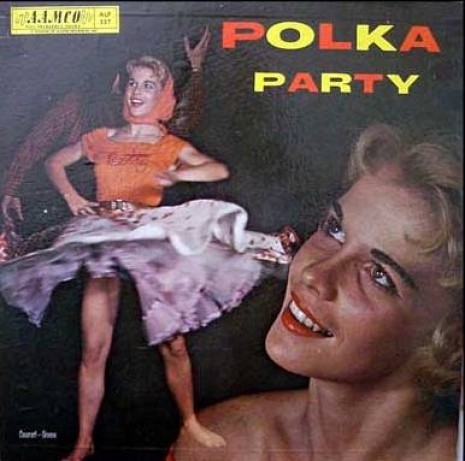
Slade 'Gudbuy T'Jane' mystery 70s all-female Swiss polka threesome (The Shags meets Ricola)! First video dangerousminds.net ever stole - they're up to 30 and counting


Slade Gudbuy T'Jane performed by all-female Swiss polka threesome meets The Shags, meets Ricola!


http://bedazzled.blogs.com/.a/6a00d834524bea69e2013488afe505970c-pi


This languished, unremarked and untitled, on a YouTuber's back page, listed only as 'Unknown Swiss Group,' back in the day.


it was stolen and posted to DangerousMinds by Marc Campbell 8.4.10

HERE

08.04.2010
  https://dangerousminds.net/content/uploads/images/made/content/uploads/images/polka_thumb_465_461_int.jpg

this is what dirtbag wrote:


There are no words. Thanks to the internet these ladies are immortalized forever.

One minute and 15 seconds of musical genius. 


Filmed sometime in the 70’s in Switzerland, this video and group are shrouded in mystery.

Anybody know who they are?

Posted by Marc Campbell

SEE @DangerMindsBlog on Twitter Shame List Grow by the Day


dirtbag's Secret YouTube Stash HERE


Published on Aug 9, 2010

#stolen by Dangerous Minds​ #MarcCampbell

Goodbye T'Jane, goodbye T'Jane,
She's a dark horse see if she can
Goodbye T'Jane, goodbye T'Jane, painted up like a fancy young man

Chorus 

She's a queen, can't you see what I mean;
She's a queen
See, see, she's a queen
And I know she's alright, alright, alright, alright
I say you're so young, you're so young

I said
Goodbye T'Jane, goodbye T'Jane,
Get a kick from her forties trip boots
Goodbye T'Jane, goodbye T'Jane,
Has them made to match up to her suits

Chorus

I said
Goodbye T'Jane, goodbye T'Jane,
Like a dark horse see how she ran
Goodbye T'Jane, goodbye T'Jane,
Spits on me cos' she knows that she can

Chorus

I say you're so young, she's alright, alright, alright, alright.
I say you're so young, you're so young, alright, alright
I say you're so young ...

"Gudbuy T'Jane" was Slade's follow up to their hit single "Mama Weer All Crazee Now". In his autobiography Who's Crazee Now?, bass player and lead vocalist Noddy Holder explained the inspiration for the song. Jane was the co-host of a TV chat show in San Francisco they met on their US tour. They wrote the song in about half an hour, "one of the easiest songs we ever recorded". The line "Got a kick from her '40s trip boots" is a reference to her kicking Holder up the backside when the band were having a laugh at her expense. Jane had bought apair of platform shoes which she called her '40s trip boots, and somehow managed to lose them. "She thought they were original '40s shoes and she told us that she had paid a fortune for them", he said, adding "She was a real loony, a typical San Francisco hippy".


"Words and Music by Neville Holder and James Lea"

January 8, 2019

Sex and Fame: The Mary Millington Story PLUS 9-video playlist, filography PLUS The Great Rock 'n' Roll Swindle disco medley, AND final repose


https://66.media.tumblr.com/820cc9bfae4879d7092b43c84b509d82/tumblr_pl0g8eCm2m1wlzku0o1_500.jpg


Mary Millington

9-video playlist


THE GREAT ROCK 'N' ROLL SWINDLE

Medley


Anarchy in the U.K.
God Save the Queen
Pretty Vacant
No One is Innocent
dalla colonna sonora del film di Malcom McLaren


Sex and Fame: The Mary Millington Story (October 12th 1996, Channel 4)


Mary Millington

9-video playlist

1


Mary Millington

A scene from vintage 1979 sex film Queen of the blues, one of her last films before her suicide, 19.8.79, aged 33

2

Mary Millington - Come Play Me

Mary Talks Dirty

A cocaine habit paid for and sponsored by David Sullivan...who's flithy rag 'Whitehouse' would endlessley feature her spread legged and doped. Prior to meeting him, Mary or Ruth as I knew her, was a charming, pretty and above all honest girl, who got sucked into a nest of avaricious vipers...who now run football clubs! Mary was worth more than all your snorts put together... you'll reap what you raped and long may you prosper...for sure as hell I wouldn't want to meet Mary in Heaven!

3

Disco Zombies - Mary Millington

Here Come The Buts

Mary Millington 7"

1980

Bass -- Geoff Dodimead, Guitar -- Mark Sutherland Guitar, Vocals -- Andy Ross Vocals, Percussion -- Dave Henderson In 1979 they released two 7 inches. First was The Invisible E.P. and then Drums Over London.

Their third and final release was Here Comes The Buts 7" in 1980. Here Comes The Buts was featured on "British Underground - The Best of the UK Punk New Wave, 1977 - 1982 - Vol.2" from Chaos Wreckords.

4

Keep It Up Downstairs

Join Diana Dors, adult superstar Mary Millington, Willie Rushton, Françoise Pascal, Aimi MacDonald and erstwhile Artful Dodger, Jack Wild for a very Seventies period sex-comedy.

Lampooning Upstairs Downstairs, KEEP IT UP DOWNSTAIRS sees a host of stars shedding their Edwardian costumes to save the family silver!

5

The Films of Mary Millington ORIGINAL MOVIE POSTERS

A selection of original movie posters from some of the films of the British Sexploitation star Mary Millington

6

Eskimo Nell (1975)

Alongside Come Play with Me and Confessions of a Window Cleaner, Eskimo Nell takes its place

7

Respectable: The Mary Millington Story (2015)

"In the 1970s one girl broke all the rules."


Teaser trailer for Respectable: The Mary Millington Story, due for release in 2016.


Mary became the most successful British model of the 1970s, whose racy reputation could shift a million glamour magazines a month.


She also starred in the longest-running British movie of all-time, 'Come Play with Me,' released in 1977, and still playing in London’s West End four years later.

Tragically, she died, aged 33, August 1979.

8

The Great Rock 'n' Roll Swindle (1980) Trailer

Directed by Julien Temple


Filmography

 The Great Rock 'n' Roll Swindle
Mary, The Crook's girlfriend

 1979 Queen of the Blues
Mary, Queen of the Blues

 1978 The Playbirds
Lucy

 1978 What's Up Superdoc!
Champagne Girl

 1977 Come Play with Me
Sue

 1976 Keep It Up Downstairs
Polly

 1976 Intimate Games
Choir Girl (uncredited)

 1976 I'm Not Feeling Myself Tonight
Girl in Sunglasses (uncredited)

 1976 Liz
Erik's girlfriend (as Mary Maxted)

 1975 Adam and Nicole
Jane (as Mary Maxted)

 1975 Public Eye (TV Series)
Unidentified Extra

- Lifer (1975) ... Unidentified Extra (uncredited)

 1975 Eskimo Nell
Traffic Warden Stripper (uncredited)

 1974 Sex Is My Business (Short)

 1973 Naughty Wives
Traffic Warden (uncredited)

 1971 Oral Connection (Short)

 1971 Special Assignment (Short)

 1970 Miss Bohrloch (Short)
Prostitute (uncredited)


Trivia

Subject of the 1980 song


"Mary Millington (You Made Me Fall In Love With You)"


by The Disco Zombies, it appears on their album "Here Come the Butts 7".


Quotes

Blue movies are great, educational and great tension-relievers. We all need horny thrills, right?

I treat sex as something to be enjoyed, something to be savored, something to cling to, something to be indulged in whenever possible. The old slogan "Make love not war" was a very good one.


Queen Of The Blues: Mary Millington’s Confessions


On 19th August 1979, Mary Millington’s lifeless body was discovered by her husband, at her home in Walton-on-the-Hill in Surrey; she had taken an overdose of paracetamol, washed down with a large amount of vodka, a slow and agonising way to die. Four suicide notes were found at the scene, each one documenting their author’s troubled state of mind and explained how she felt that death was her only option.

As the most recognisable adult star in Britain, for the past decade Mary had devoted herself to a tireless campaign for more liberal pornography laws, and for a freer debate on the expression of female sexuality. Even as she lay dying she wrote, ‘I do hope so much porn is legal one day, they called me obscene names for being in possession of it – I can’t go through anymore.’ The prospect of spending time in jail was one that haunted Mary in her final years, and the two London adult shops she owned and often worked in, had been subjected to countless raids. At the time of her death, she was due to appear before the Old Bailey on a recent obscenity charge, and feeling that she was being deliberately persecuted by the authorities, she confessed in one of the notes found beside her, ‘The police have framed me yet again. They frighten me so much. I can’t face the thought of prison.’

Born Mary Ruth Quilter in Kenton, Middlesex on 30th November 1945, Mary shared her birthday with Winston Churchill, something she often remarked upon. Mary’s mother, Joan Quilter, worked for the Foreign Office and her father was the opera critic, John W. Klein; the relationship was a casual one and dissolved soon after Mary was born, with Klein eventually losing contact altogether with both Quilter and his young daughter. A lifelong animal lover, Mary had ambitions to become a veterinary nurse, but was let down by her inability to pass the required exams. Nevertheless, she became an ardent supporter of several animal charities, including the PDSA, and was devoted to her own dogs.

At the age of eighteen, Mary met and married a butcher, Bob Maxted, and moved to Dorking, but was unhappy over her lack of a career. Taking a job as the manager of a fashionable boutique, she also began modelling part-time and in 1970, she met the notorious pornographer John Lindsay. By now separated from her husband, Lindsay managed to persuade to appear in several short pornographic films, known as ‘loops,’ the first of which was Miss Bohrloch. Extremely confident in her body, Mary would feature in around twenty loops in total, bringing her to the attention of pornographers across Europe and winning her unapologetic sexuality a legion of admirers. As Mary freely admitted, ‘From being a kid I have always been something of an exhibitionist, point a camera at me and I was posing madly…with my clothes on of course, it was later when I started to take them off.’

Soon after starring in the 1974 Harrison Marks production, Sex Is My Business, Mary was introduced to David Sullivan, one of the most prolific adult magazine publishers in the country and the two quickly began a relationship. As a marketing ploy for his new protégé Sullivan encouraged Mary to adopt the name Millington in order to claim she was the sister of Whitehouse editor Doreen Millington. Her risqué shoots and uninhibited style meant that Mary soon became a firm favourite with readers of Sullivan’s publications, which included Whitehouse, Playbirds, Ladybirds and Private.

Early on in her career, Mary began working as an escort, which she chose to continue after she had become well-known, even boasting that her high-profile lovers included the then Prime Minister Harold Wilson, as well as the Shah of Iran and actress Diana Dors.

In 1977, Mary featured in the softcore comedy Come Play With Me, produced by her lover Sullivan which saw her acting alongside several famous faces of the British screen, including Alfie Bass and Irene Handl. To garner publicity for the film, Mary and some of her co-stars stood outside 10 Downing Street to pose with a policeman when,  in an impromptu move, Mary pulled down her top to reveal her breasts. Although Mary’s role was significantly reduced in the final cut, the film was a huge success and ran at the Moulin Cinema in London from 1977 until 1981. Actress Suzy Mandel later spoke of how she remembered Mary as an outgoing and cheerful girl, who loved listening to the Bee Gees and drinking Campari and lemonade on the film’s set.

The following year, Mary was cast in Sullivan’s next film The Playbirds, about a group of WPCs, ironic given that Mary would come to distrust and dislike the police whom she believed relentlessly hounded her for her lifestyle. Mary’s subsequent adult films like 1979’s Queen of the Blues, proved to be far less popular with viewers, leading Mary to worry that her star and her looks were starting to wane. Her final cinematic appearance was a brief cameo in the Sex Pistols film, The Great Rock ‘n’ Roll Swindle, released in March 1980.

Above: Clip from The Playbirds (1978)

Fear of aging and losing her fame started to eat away at Mary’s earlier confidence. Initially only a casual drug user, she began to rely heavily on cocaine and Mary’s habit spiralled out of control, leaving her finances in disarray and resulting in demands over unpaid taxes. The death of her mother Joan from cancer in 1976 had caused Mary to succumb to bouts of deep depression, which she found increasingly difficult to escape. As a way of coping, Mary turned to shoplifting, often stealing cheap and pointless objects; she was arrested numerous times, the last only days before her suicide.

Calling her publicist John M. East on 18th August 1979, Mary had asked him to sing to her a song she liked, that ended with the word ‘tomorrow.’ East did as she asked, only to have her reply, ‘there will be no tomorrow John,’ before hanging up. For Mary her prediction came true; she was buried alongside her mother at the St Mary Magdalene Church in South Holmwood, Surrey.

In 1980 Sullivan released the film Mary Millington’s True Blue Confessions – a move that was seen by many as a cheap and exploitative stunt. As the new decade progressed, plenty of upcoming young stars had been willing to take Mary’s place and she faded from public memory for all but a small number of dedicated fans. However, books such as Simon Sheridan’s 1999 biography Come Play With Me: The Life and Films of Mary Millington, and the 1996 Channel 4 documentary Sex and Fame: The Mary Millington Story, have brought her to the attention of more modern audiences. With the legalisation of hardcore pornography in Britain in 2000, it would seem that Mary finally got her wish, albeit twenty years too late for her. In our progressively sexualised society, with an abundance of extremely graphic pornographic images readily available online, Mary’s photographs and films appear relatively tame; current as ever though, is her unfaltering belief that The old slogan “Make love not war” was a very good one.’

Selected Sources:
Come Play With Me: The Life and Films of Mary Millington – Simon Sheridan (1999)